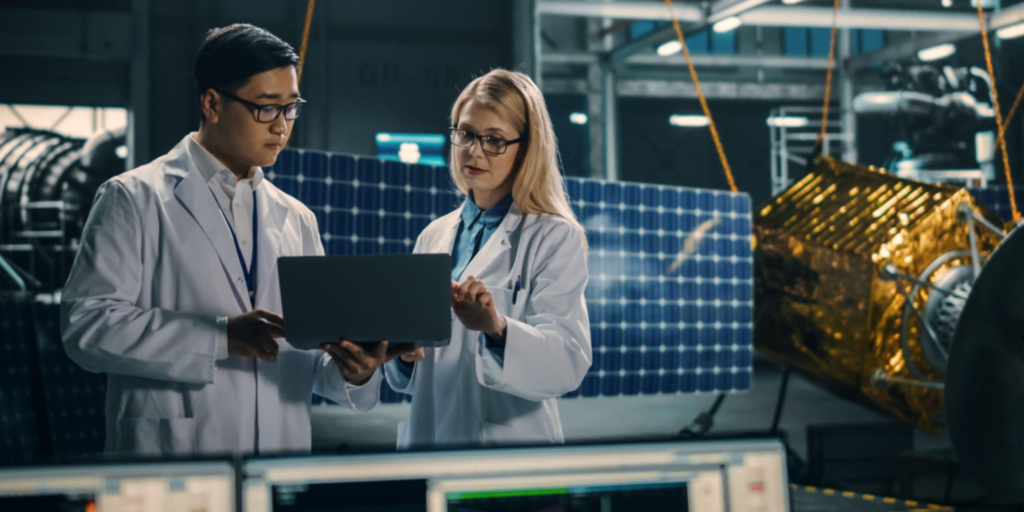
Latest Career Opportunities in Space Technology
The space industry is experiencing extraordinary growth as governments, private companies, and research organizations invest heavily in satellite systems, space exploration, communication technology, artificial intelligence, and advanced aerospace innovation. In 2026, space technology is no longer limited only to astronauts or government space agencies. The industry now creates diverse career opportunities for engineers, scientists, programmers, researchers, analysts, designers, communication experts, and technology professionals across multiple sectors. Because of this rapid expansion, career opportunities in space technology are becoming highly attractive for students interested in science, innovation, and future-focused industries.
Earlier, space research careers were mainly associated with national organizations conducting scientific missions and satellite launches. However, the rise of private space companies, commercial satellite services, global internet systems, space tourism, defense technology, climate monitoring, and AI-driven aerospace systems has transformed the industry dramatically.
Modern space technology careers now involve artificial intelligence, robotics, cybersecurity, software development, satellite communication, machine learning, data science, and environmental monitoring alongside traditional aerospace engineering roles.
The increasing global dependence on satellites for communication, navigation, weather forecasting, defense systems, internet services, and disaster management has created strong demand for skilled professionals capable of supporting advanced space operations.
At the same time, the space industry also involves highly competitive recruitment processes, advanced technical requirements, intense research expectations, and continuous innovation pressure. Students entering this field therefore require strong analytical ability, dedication, technical expertise, and adaptability.
Aerospace Engineering Remains a Leading Career Choice
One of the most popular career opportunities in space technology is aerospace engineering.
Aerospace engineers design, develop, test, and improve aircraft, satellites, rockets, spacecraft systems, and space exploration technologies.
Students entering aerospace engineering careers often study aerodynamics, propulsion systems, avionics, spacecraft design, robotics, material science, and flight mechanics.
Modern aerospace industries increasingly depend on advanced engineering solutions because space missions require precision, safety, efficiency, and technological innovation.
Aerospace engineering jobs continue growing within government space agencies, defense organizations, private aerospace firms, aviation industries, and satellite companies.
Students passionate about innovation and scientific research often find aerospace careers intellectually exciting and professionally rewarding.
However, aerospace engineering programs are academically demanding and require strong mathematics, physics, and technical problem-solving skills.
Satellite Technology Careers Are Expanding Rapidly
Satellite systems have become essential for communication, weather forecasting, internet connectivity, navigation, defense operations, agriculture monitoring, and disaster management.
Because global industries depend heavily on satellite networks, satellite technology careers are growing rapidly worldwide.
Students working in satellite communication careers often manage satellite design, signal systems, orbital operations, data transmission, remote sensing technology, and telecommunications infrastructure.
The growing demand for global internet access and digital connectivity continues increasing investments in satellite systems.
Modern businesses, governments, and defense sectors require highly skilled professionals capable of maintaining reliable satellite operations.
Students entering satellite industries often gain opportunities in communication companies, research organizations, private space firms, and national aerospace agencies.
At the same time, satellite technology environments involve high technical complexity and operational responsibility.
Private Space Companies Are Creating New Jobs
One of the biggest transformations in the space industry is the rapid growth of private space companies.
Earlier, space exploration mainly depended on government agencies. Today, private organizations actively develop rockets, satellites, reusable spacecraft, commercial space stations, and space tourism systems.
Private space company jobs are increasing because commercial investment in space technology continues growing globally.
Students interested in entrepreneurship, innovation, and advanced engineering often find private aerospace industries highly dynamic and future-oriented.
Private companies also create opportunities for software developers, AI engineers, cybersecurity experts, project managers, business analysts, and communication specialists within space sectors.
Innovation-driven environments often encourage creativity and rapid technological advancement.
However, startup-style space companies may involve intense work pressure and highly competitive expectations.
Artificial Intelligence Is Influencing Space Technology
Artificial intelligence is becoming deeply integrated within modern space systems.
AI in space technology now supports satellite data analysis, autonomous spacecraft navigation, mission planning, predictive maintenance, robotics control, and climate monitoring systems.
Students skilled in artificial intelligence, machine learning, and data science increasingly gain strong opportunities within aerospace industries.
Modern space research organizations depend heavily on intelligent systems because space operations generate enormous amounts of technical data requiring advanced analysis.
AI-powered systems also improve operational efficiency and reduce risks during complex space missions.
Students combining programming expertise with aerospace knowledge often gain significant competitive advantages in future recruitment markets.
At the same time, rapidly evolving AI technologies require continuous learning and technical adaptation.
ISRO and National Space Agencies Offer Prestigious Careers
ISRO career opportunities remain among the most respected and competitive scientific career paths in India.
National space agencies provide opportunities in satellite development, launch systems, propulsion engineering, mission analysis, robotics, communication technology, and scientific research.
Students joining government space organizations often contribute directly toward national technological advancement and global scientific innovation.
Careers within government aerospace agencies generally offer strong professional reputation, research opportunities, and long-term career stability.
Space research jobs within national organizations also inspire emotional pride because professionals contribute toward major scientific achievements and national missions.
However, recruitment processes for government space agencies are highly competitive and academically demanding.
Space Research Careers Support Scientific Innovation
Scientific discovery remains one of the strongest motivations behind space exploration industries.
Researchers working in space science careers study planetary systems, space environments, astrophysics, satellite imaging, atmospheric science, and deep space exploration technologies.
Scientific research helps humanity understand climate systems, environmental changes, communication technologies, and future possibilities for space exploration.
Students passionate about discovery, experimentation, and innovation often feel highly motivated by space research careers.
Modern research institutions increasingly collaborate internationally because global space exploration requires shared expertise and technological cooperation.
At the same time, scientific research careers may involve long project timelines and highly specialized academic training.
Software Development Is Important in Space Industries
Modern space systems depend heavily on advanced software infrastructure.
Software developers working within space industries create mission control systems, navigation software, simulation platforms, satellite communication tools, cybersecurity systems, and AI-based operational technologies.
Careers in aerospace technology increasingly require programming knowledge because digital systems control nearly every aspect of space missions.
Students skilled in coding, cloud computing, cybersecurity, and AI often find growing opportunities within space industries.
Software-focused space careers combine technical innovation with future-oriented digital problem-solving.
However, software errors within aerospace environments can create major operational risks, requiring extreme precision and testing standards.
Robotics and Automation Are Creating Future Careers
Robotics technology plays a major role in modern space exploration.
Robotic systems now support satellite servicing, space station maintenance, planetary exploration, autonomous navigation, and scientific experimentation in extreme environments.
Students interested in robotics engineering, automation systems, and AI-driven machines often find exciting opportunities within space industries.
Space organizations increasingly depend on robotic technologies because human space missions involve significant financial and operational challenges.
Automation also improves mission safety and operational efficiency during complex aerospace activities.
However, robotics research and development require advanced technical expertise and interdisciplinary collaboration.
Space Technology Supports Climate Monitoring
Space technology also contributes significantly toward environmental monitoring and climate research.
Satellites help scientists track weather patterns, environmental pollution, natural disasters, agricultural changes, water resources, and climate conditions globally.
Students working in environmental space research often combine data science, satellite imaging, environmental studies, and AI analysis systems.
These careers contribute positively toward disaster management, sustainability planning, and climate awareness.
Professionals involved in environmental monitoring often feel socially motivated because their work supports global welfare and ecological understanding.
At the same time, climate-related research environments may involve complex scientific analysis and long-term data interpretation.
Universities Are Expanding Aerospace Education
Educational institutions worldwide increasingly offer specialized aerospace engineering programs, satellite technology courses, robotics training, and AI-integrated space science curriculums.
Universities now recognize growing demand for skilled aerospace professionals and therefore invest more heavily in space technology education.
Students today can access specialized certifications, research internships, simulation labs, drone technology training, and satellite communication programs more easily than before.
Practical aerospace education improves employability because employers increasingly prefer candidates with project-based learning experience.
However, high-quality aerospace education sometimes requires expensive infrastructure and advanced laboratory resources.

Space Industry Growth Is Creating Global Opportunities
The global space economy continues expanding rapidly due to increasing investments in communication systems, defense technology, scientific missions, digital infrastructure, and commercial aerospace industries.
Countries worldwide now recognize space technology as strategically important for economic development, national security, and technological leadership.
Jobs in space industry sectors are therefore increasing internationally across engineering, software, AI, robotics, data science, communication systems, and business management.
Students entering this field may gain opportunities not only in domestic organizations but also in global aerospace ecosystems.
International collaborations within space industries are also increasing because modern missions often involve multinational technological partnerships.
Space Careers Require Strong Technical Skills
Space technology industries demand high levels of technical precision and scientific understanding.
Students preparing for space science careers usually require strong foundations in mathematics, physics, engineering principles, programming, and analytical thinking.
Problem-solving ability becomes especially important because aerospace systems involve highly complex technical operations.
Students with curiosity, discipline, innovation mindset, and long-term learning commitment often perform well within aerospace industries.
At the same time, the technical difficulty of space-related careers can feel challenging for students lacking strong scientific preparation.
Future Scope of Space Technology Careers
The future scope of space technology appears extremely promising as humanity continues investing in satellite systems, lunar missions, Mars exploration, commercial space travel, AI-driven aerospace systems, and advanced communication technologies.
Emerging industries such as space tourism, asteroid mining, reusable rockets, and interplanetary research may create entirely new career categories in coming decades.
Future aerospace professionals will likely require multidisciplinary expertise combining engineering, AI, robotics, software systems, and data analytics together.
Students entering space industries today may become part of one of the most innovative technological revolutions shaping the future world.
Conclusion
Latest career opportunities in space technology are expanding rapidly due to global investments in aerospace engineering, satellite communication systems, artificial intelligence, robotics, scientific research, and private space innovation. Modern space industries now create diverse opportunities for engineers, programmers, researchers, analysts, software developers, and technology professionals across multiple sectors.
Space technology careers 2026 are no longer limited only to astronauts or government scientists. The industry now supports innovation-driven opportunities within satellite systems, AI-powered aerospace technologies, digital communication networks, environmental monitoring, and advanced scientific exploration.
Although space industries involve technical complexity, intense competition, and continuous learning demands, students who develop strong scientific knowledge, problem-solving skills, and technological adaptability often gain highly rewarding and future-focused career opportunities.
As humanity continues exploring new technological frontiers beyond Earth, space technology will likely remain one of the most exciting and rapidly growing industries shaping the future of science, innovation, and global development.
More Blogs you may read
Why Employers Value Curiosity: How Curiosity Drives Career Growth, Innovation, and Workplace Success 2026
Why Employers Value Curiosity The modern workplace is changing faster...
Read More
Scholarships for Students Excelling in Sports and Academics: A Complete Guide to Funding Higher Education 2026
Scholarships for Students Excelling in Sports and Academics Pursuing higher...
Read MoreGraduate Attributes Every University Should Develop: Essential Skills for Career Success and Lifelong Learning 2026
Graduate Attributes Every University Should Develop Higher education has always...
Read MorePreparing for Two Entrance Exams Together: A Complete Strategy for Smart and Successful Exam Preparation 2026
Preparing for Two Entrance Exams Together Preparing for a single...
Read More