
The Future of Degree-Free Education
For generations, earning a college degree was considered one of the most reliable paths to career advancement and financial stability. Students were encouraged to complete higher education because a university qualification often served as a gateway to professional opportunities. While degrees continue to hold significant value in many industries, the educational landscape is undergoing a remarkable transformation. A growing number of learners, employers, and industry leaders are beginning to question whether a traditional degree is the only route to success.
The rise of degree-free education is reshaping how people acquire knowledge, develop expertise, and prepare for the workforce. Today, students have access to countless learning opportunities that extend beyond conventional classrooms and university programs. Online certifications, skill-based training, micro-credentials, boot camps, mentorship programs, and industry-focused courses are creating new pathways to professional growth. As technology continues to influence both education and employment, the future of degree-free education is becoming one of the most discussed topics in modern learning.
This shift does not suggest that degrees are becoming irrelevant. Instead, it highlights a growing recognition that skills, practical experience, and continuous learning can be equally important in many career fields. As industries evolve rapidly and workforce demands change, alternative education pathways are gaining momentum and challenging traditional assumptions about learning and career success.
Why Degree-Free Education Is Gaining Popularity
One of the main reasons degree-free education is attracting attention is the changing nature of employment. Many employers are increasingly focused on what candidates can do rather than where they studied. Skills, adaptability, creativity, and real-world experience are becoming highly valued qualities in hiring decisions.
In fast-moving industries such as technology, digital marketing, data analytics, cybersecurity, graphic design, and software development, practical abilities often matter more than academic credentials alone. Companies frequently seek individuals who can solve problems, contribute immediately, and adapt to evolving workplace requirements.
At the same time, the cost of higher education has become a concern for many students and families. University tuition, accommodation expenses, and educational fees can create significant financial pressure. As a result, learners are exploring more affordable alternatives that allow them to develop career-ready skills without accumulating substantial debt.
Degree-free education provides flexibility, accessibility, and affordability, making it an attractive option for students seeking efficient and targeted learning experiences.
The Shift Toward Skills Over Degrees
The phrase “skills over degrees” has become increasingly common in discussions about the future of education. This concept reflects a growing belief that demonstrated competence should carry significant weight in hiring and career advancement.
Employers are recognizing that degrees do not always guarantee workplace readiness. A candidate may possess strong academic credentials yet lack practical experience or essential professional skills. Conversely, someone without a traditional degree may demonstrate exceptional expertise through projects, certifications, portfolios, and hands-on experience.
Skill-based learning addresses this challenge by focusing directly on competencies that employers value. Learners develop practical knowledge through real-world applications, project-based assignments, and industry-specific training.
This approach aligns closely with modern workforce expectations. Instead of spending years studying broad academic subjects, students can focus on acquiring skills that directly support their career objectives.
Technology Is Driving Educational Transformation
Technology has become one of the most powerful forces behind the growth of degree-free education. Digital platforms have made high-quality learning accessible to people around the world, regardless of geographic location or financial circumstances.
Online learning platforms offer courses covering virtually every professional field imaginable. Students can learn coding, artificial intelligence, digital marketing, business management, design, finance, content creation, and countless other subjects from experienced instructors and industry professionals.
The accessibility of digital learning has created opportunities that were previously unavailable to many individuals. Learners can study at their own pace, customize their educational journeys, and continuously update their knowledge as industries evolve.
Technology has also accelerated the development of personalized learning experiences. Educational platforms increasingly use data and adaptive systems to recommend content based on individual goals, skill levels, and learning preferences.
The Rise of Micro-Credentials and Professional Certifications
One of the most significant developments in degree-free education is the growing popularity of micro-credentials and professional certifications. These credentials allow learners to demonstrate specific competencies without completing lengthy degree programs.
Unlike traditional degrees that cover broad subject areas, certifications focus on targeted skills and practical applications. This specialized approach enables students to acquire relevant expertise within shorter timeframes.
Many industries now recognize professional certifications as valuable indicators of competence. Employers often view certifications as evidence that candidates possess current knowledge aligned with industry standards and technological advancements.
Micro-credentials are particularly appealing because they support continuous learning. Professionals can update their skills regularly, ensuring they remain competitive in rapidly changing industries.
As workforce requirements continue evolving, micro-credentials are expected to play an increasingly important role in career development and employability.
How Employers Are Responding to Alternative Education
Employer attitudes toward degree-free education have shifted considerably in recent years. Organizations facing talent shortages are becoming more open to evaluating candidates based on demonstrated skills rather than academic qualifications alone.
Many businesses now use skills-based hiring practices that prioritize portfolios, assessments, certifications, project experience, and practical problem-solving abilities. This approach expands talent pools while helping employers identify candidates who can perform effectively in specific roles.
Technology companies have been among the most influential advocates of skills-based hiring. However, similar trends are emerging across industries including healthcare support services, digital media, finance, logistics, manufacturing, and business operations.
Employers increasingly understand that talent can emerge from diverse educational backgrounds. This growing acceptance is creating new opportunities for individuals pursuing alternative learning pathways

The Benefits of Degree-Free Learning
Degree-free education offers several advantages that contribute to its growing popularity. Flexibility is one of its strongest benefits. Learners can access educational resources from virtually anywhere, making it easier to balance education with work, family responsibilities, and other commitments.
Another advantage is speed. Traditional degree programs often require several years to complete, whereas certifications and specialized courses can be completed within months or even weeks. This allows students to enter the workforce more quickly and begin gaining practical experience.
Affordability also plays an important role. Many alternative learning options cost significantly less than traditional university programs. This accessibility helps reduce financial barriers and expands educational opportunities.
Additionally, degree-free education encourages continuous skill development. Rather than viewing education as a one-time achievement, learners embrace ongoing growth and professional improvement throughout their careers.
Challenges Facing Degree-Free Education
Despite its advantages, degree-free education is not without challenges. Certain professions continue to require formal degrees due to regulatory, legal, or professional standards. Careers in medicine, law, engineering, architecture, and many scientific fields still depend heavily on accredited academic qualifications.
There is also considerable variation in the quality of alternative education programs. Students must carefully evaluate learning providers to ensure courses deliver meaningful value and credible credentials.
Another challenge involves employer recognition. Although acceptance of alternative education is increasing, some organizations still prioritize traditional academic pathways. This can create uncertainty for learners deciding between degree programs and alternative learning options.
Furthermore, degree-free education often requires high levels of self-discipline and motivation. Without structured academic environments, learners must take greater responsibility for managing their educational progress.
Lifelong Learning Will Define Future Success
One of the most important lessons emerging from the degree-free education movement is that learning no longer ends with graduation. The modern workforce rewards adaptability, curiosity, and continuous development.
Industries are changing too quickly for any single qualification to remain sufficient throughout an entire career. Professionals must regularly update their knowledge, learn new technologies, and adapt to emerging trends.
Degree-free education supports this reality by encouraging lifelong learning. Learners can continuously acquire new skills, pursue additional certifications, and remain responsive to industry changes.
This mindset is becoming increasingly valuable in a world where innovation, automation, and digital transformation are reshaping professional landscapes.
The Relationship Between Degrees and Alternative Education
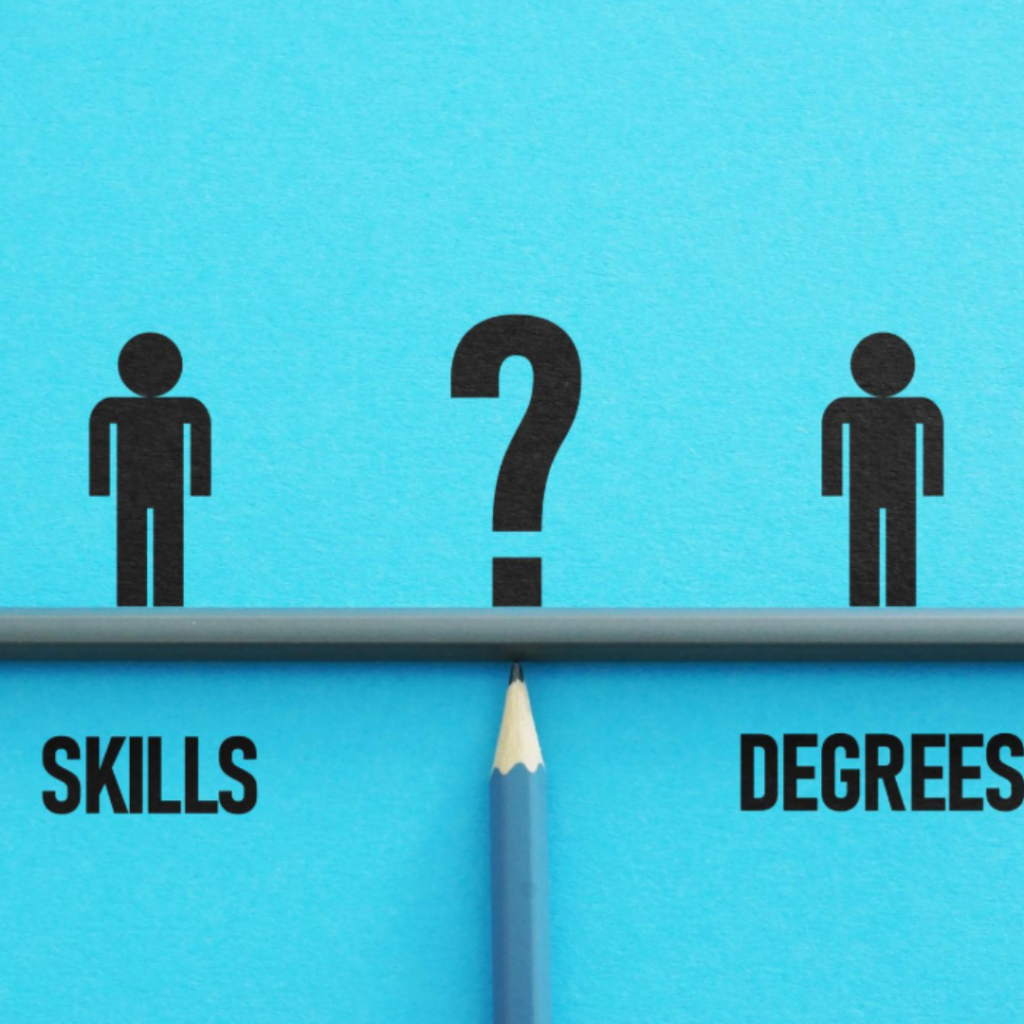
The future of education is unlikely to be a competition between degrees and alternative learning pathways. Instead, the most successful educational systems may combine the strengths of both approaches.
Traditional degrees provide comprehensive academic foundations, critical thinking abilities, research skills, and intellectual development. Alternative education delivers flexibility, practical expertise, and rapid adaptation to industry needs.
Many students are already blending these pathways. They pursue university degrees while simultaneously earning certifications, participating in boot camps, and developing practical portfolios.
This hybrid approach creates well-rounded professionals who possess both academic knowledge and industry-relevant skills.
Conclusion
The future of degree-free education represents one of the most significant shifts in modern learning. As employers increasingly prioritize skills, technology expands access to education, and workforce demands evolve, alternative learning pathways are becoming more influential than ever before.
Degree-free education offers flexibility, affordability, practical relevance, and continuous learning opportunities that align with the needs of today’s economy. While traditional degrees will remain important in many fields, they are no longer the only pathway to professional success.
The future belongs to learners who embrace adaptability, develop valuable skills, and commit to lifelong growth. Whether through university programs, certifications, online courses, or industry-focused training, education is becoming more diverse, accessible, and personalized. In this changing landscape, success will depend less on the type of credential earned and more on the ability to learn, evolve, and contribute meaningful value in an ever-changing world.
More Blogs you may read
Why Employers Value Curiosity: How Curiosity Drives Career Growth, Innovation, and Workplace Success 2026
Why Employers Value Curiosity The modern workplace is changing faster...
Read More
Scholarships for Students Excelling in Sports and Academics: A Complete Guide to Funding Higher Education 2026
Scholarships for Students Excelling in Sports and Academics Pursuing higher...
Read MoreGraduate Attributes Every University Should Develop: Essential Skills for Career Success and Lifelong Learning 2026
Graduate Attributes Every University Should Develop Higher education has always...
Read MorePreparing for Two Entrance Exams Together: A Complete Strategy for Smart and Successful Exam Preparation 2026
Preparing for Two Entrance Exams Together Preparing for a single...
Read More