
Why Many Graduates Feel Left Behind
Introduction
Graduation is often portrayed as a defining milestone that opens the door to professional success, financial independence, and exciting career opportunities. Students spend years working toward this moment with the expectation that earning a degree will create a smooth transition into the professional world. For many, graduation represents achievement, growth, and the beginning of a new chapter.
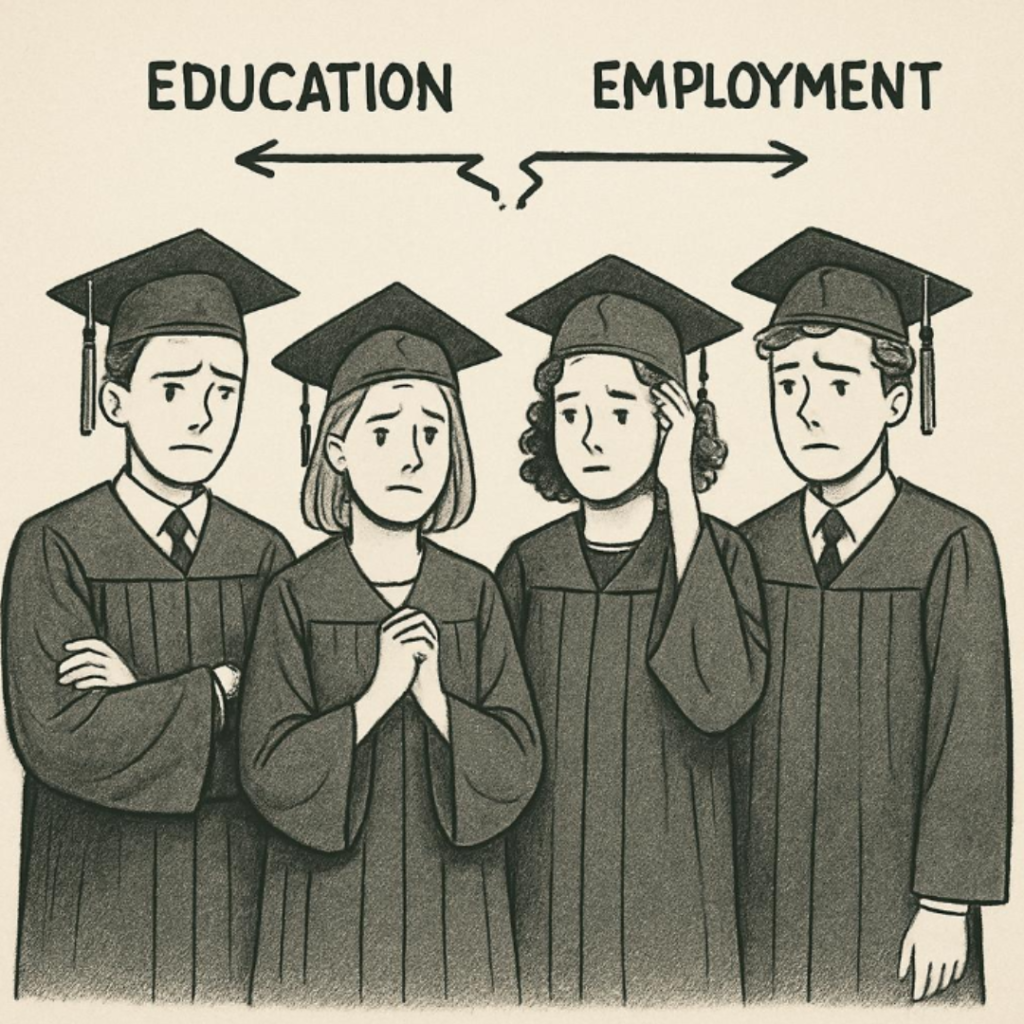
However, the reality is often more complicated. A growing number of graduates feel left behind shortly after completing their education. Despite earning degrees, developing skills, and investing significant time in academic achievement, many find themselves struggling to secure employment opportunities, establish career direction, or meet the expectations they created during their student years.
This experience is becoming increasingly common in today’s competitive job market. Graduate employment challenges, changing workforce demands, rising career expectations, and constant social comparison contribute to feelings of uncertainty. Many graduates question whether they are progressing quickly enough, achieving enough, or keeping pace with their peers.
While these concerns are understandable, they often stem from broader changes in the relationship between education, employment, and professional growth. Understanding why many graduates feel left behind provides valuable insight into the challenges facing modern graduates and helps create healthier perspectives on career development.
The Transition From Education to Employment
One of the biggest reasons graduates feel left behind is the difficult transition from academic life to professional employment. During education, progress is relatively structured. Students move from one academic year to the next, complete examinations, receive grades, and follow a predictable path.
After graduation, that structure largely disappears. Career development becomes less predictable and more dependent on individual circumstances.
Many graduates expect immediate clarity regarding employment opportunities and long-term goals. Instead, they encounter uncertainty, competition, and decision-making responsibilities that may feel unfamiliar.
This transition can create discomfort because professional growth rarely follows the same predictable timeline as education.
Graduates often discover that building a career requires patience, flexibility, and continuous adaptation.
The Growing Competition in the Graduate Job Market
The graduate job market has become increasingly competitive. More students than ever are pursuing higher education, which means larger numbers of qualified candidates are entering the workforce.
While educational attainment continues growing, employment opportunities do not always expand at the same pace.
As a result, graduates frequently compete for similar positions. Employers often receive large numbers of applications for entry-level roles, making recruitment processes highly selective.
Job market competition creates challenges even for capable candidates.
Graduates may possess strong academic records yet struggle to distinguish themselves among numerous applicants.
This environment contributes to career anxiety because employment outcomes often depend on factors beyond academic achievement alone.
The competitive nature of the graduate job market can make progress feel slower than expected.
Career Expectations Versus Workplace Reality
Many graduates enter the workforce with expectations shaped by education, media, and social influences. They often anticipate steady career progression, meaningful work, and relatively quick professional advancement.
While these goals are achievable, the timeline is frequently longer than expected.
Workplace reality often involves entry-level positions, learning curves, skill development, and gradual growth. Most professionals begin by building experience before gaining significant responsibilities.
The gap between career expectations and workplace reality can create disappointment.
Graduates may incorrectly assume they are falling behind when they are actually experiencing normal early-career challenges.
Understanding that professional growth takes time can reduce unnecessary frustration and support healthier career planning.
Social Media Influence and Career Comparison
Social media influence has become one of the most powerful factors affecting graduate confidence. Platforms such as LinkedIn, Instagram, TikTok, and YouTube are filled with success stories, career milestones, and professional achievements.
Graduates regularly see peers announcing promotions, job offers, certifications, entrepreneurial successes, and major accomplishments.
While these achievements are genuine, social media rarely reveals the setbacks, rejections, and uncertainties that occurred behind the scenes.
This creates an incomplete picture of career development.
Graduates often compare their everyday reality to carefully selected highlights from others.
These comparisons can create the impression that everyone else is progressing faster.
In reality, career journeys vary significantly, and visible success often represents only a small portion of a much larger story.

Why Career Anxiety Is Increasing
Career anxiety has become increasingly common among graduates. Economic uncertainty, evolving industries, technological change, and competitive employment markets all contribute to concerns about the future.
Many graduates worry about making the wrong career choices, selecting unsuitable industries, or missing valuable opportunities.
This anxiety is often intensified by pressure to achieve professional success quickly.
Graduates may feel that every decision carries long-term consequences, which makes uncertainty more stressful.
Career development, however, is rarely permanent or fixed. Most professionals change roles, develop new skills, and adapt their goals throughout their careers.
Recognizing this flexibility can help reduce fear and encourage exploration.
Career growth is often shaped through experience rather than perfect planning.
The Skills Gap and Workplace Readiness
Another reason graduates feel left behind is the perceived gap between academic preparation and workplace readiness.
Educational institutions provide valuable knowledge, but employers frequently seek additional skills such as communication, teamwork, adaptability, leadership, and problem-solving.
Graduates sometimes discover that professional success requires more than academic performance.
This realization can create self-doubt, particularly when entering unfamiliar work environments.
However, workplace readiness develops over time through practical experience.
Employers generally expect early-career professionals to continue learning after graduation.
The transition period is an opportunity for skill development rather than proof of inadequacy.
Understanding this distinction helps graduates approach professional growth more confidently.
Student Career Pressure Does Not End After Graduation
Many people assume academic pressure ends after graduation. In reality, student career pressure often evolves rather than disappears.
During education, students focus on grades, examinations, and placement opportunities. After graduation, attention shifts toward employment, income, promotions, and career progression.
The source of pressure changes, but the emotional experience often remains similar.
Graduates may feel obligated to meet expectations from family, peers, educators, or themselves.
These expectations can create stress when outcomes do not align with planned timelines.
Managing external pressure requires recognizing that success cannot always be measured through immediate results.
Career development is a long-term process rather than a short-term competition.
The Fear of Falling Behind Professionally
The fear of falling behind is one of the strongest emotional challenges facing graduates.
Many compare their progress against classmates or social media connections. When others appear to achieve milestones more quickly, self-doubt often follows.
This comparison mindset creates the illusion that career development is a race.
In reality, professional growth occurs at different speeds depending on industry, location, opportunities, interests, and personal circumstances.
Some graduates secure ideal opportunities immediately, while others discover success through gradual exploration.
The fear of falling behind often ignores these differences.
Focusing excessively on external benchmarks can reduce confidence and distract from individual progress.
A healthier approach involves measuring growth against personal goals rather than other people’s achievements.
The Importance of Career Planning and Adaptability
Career planning remains important, but adaptability is equally valuable. Many graduates enter the workforce with detailed plans only to discover unexpected opportunities and challenges.
The modern job market changes rapidly. New industries emerge, technologies evolve, and employment trends shift regularly.
Graduates who remain flexible often navigate uncertainty more effectively.
Adaptability allows individuals to explore different pathways without interpreting changes as failures.
Career planning should provide direction, but it should also allow room for growth and adjustment.
The ability to adapt has become one of the most valuable skills in modern careers.
Success increasingly depends on learning, flexibility, and resilience.
Building Professional Growth Through Small Wins
Professional growth rarely happens through dramatic breakthroughs alone. More often, it develops through consistent progress and small achievements.
Learning new skills, expanding networks, improving communication abilities, and gaining practical experience all contribute to long-term success.
Graduates who focus exclusively on major milestones may overlook meaningful progress occurring along the way.
Small wins build confidence and create momentum.
Recognizing incremental achievements helps reduce feelings of being left behind.
Professional growth becomes more sustainable when success is viewed as a continuous process rather than a single destination.
This perspective encourages persistence and resilience during challenging periods.
Creating a Healthier Definition of Graduate Success
Graduate success should not be defined solely by salary, job titles, or social recognition. While these factors may contribute to professional achievement, they represent only part of the picture.
Meaningful work, continuous learning, personal satisfaction, skill development, and positive workplace experiences are equally important.
A broader definition of success allows graduates to appreciate diverse career paths and individual priorities.
This perspective reduces unnecessary comparison and supports healthier professional development.
Every graduate journey is unique, and success often looks different for different people.
Recognizing this diversity creates more realistic expectations.
Conclusion
Many graduates feel left behind because of job market competition, career anxiety, social media influence, changing employment trends, and high expectations regarding professional success. The transition from education to employment is rarely as straightforward as many anticipate.
While these challenges are real, feeling left behind does not mean a graduate is failing. Career development unfolds differently for every individual, and professional growth often occurs gradually rather than instantly.
The solution is not eliminating ambition but developing realistic expectations. Graduates benefit from focusing on skill development, adaptability, career planning, and continuous learning rather than comparing themselves to others.
Ultimately, success is not determined by how quickly milestones are achieved. It is shaped by persistence, growth, resilience, and the ability to keep moving forward despite uncertainty. When graduates embrace this perspective, they are more likely to build meaningful and sustainable careers while maintaining confidence in their own journey.